

Windfeste Pavillons: Verankerungsmethoden, Zusatzgewichte & Vorbereitung auf die Sturmsaison
What does „windproof“ really mean?
There is no uniform EU consumer label for the wind stability of gazebos. From an engineering perspective, measurements are taken in accordance with Eurocode 1 (EN 1991-1-4), which converts local basic wind speeds and exposure into loads. Many manufacturers of external blinds/screens provide wind classes according to EN 13561 as a practical guide – nevertheless, site exposure remains the decisive factor.
Choosing the Right Anchoring Method
Concrete slab (best permanent solution)
Mark base plates, drill with SDS, extract drilling dust, and insert wedge/sleeve anchors of a size appropriate for the slab thickness; tighten with a defined torque; use stainless steel or hot-dip galvanized fasteners.
Paving on gravel
Do not screw into "floating" laid slabs. Instead, drill through the paving into concrete pads or relocate the feet to poured concrete pads. For temporary structures, trip-proof additional weights can help – but only as an interim solution.
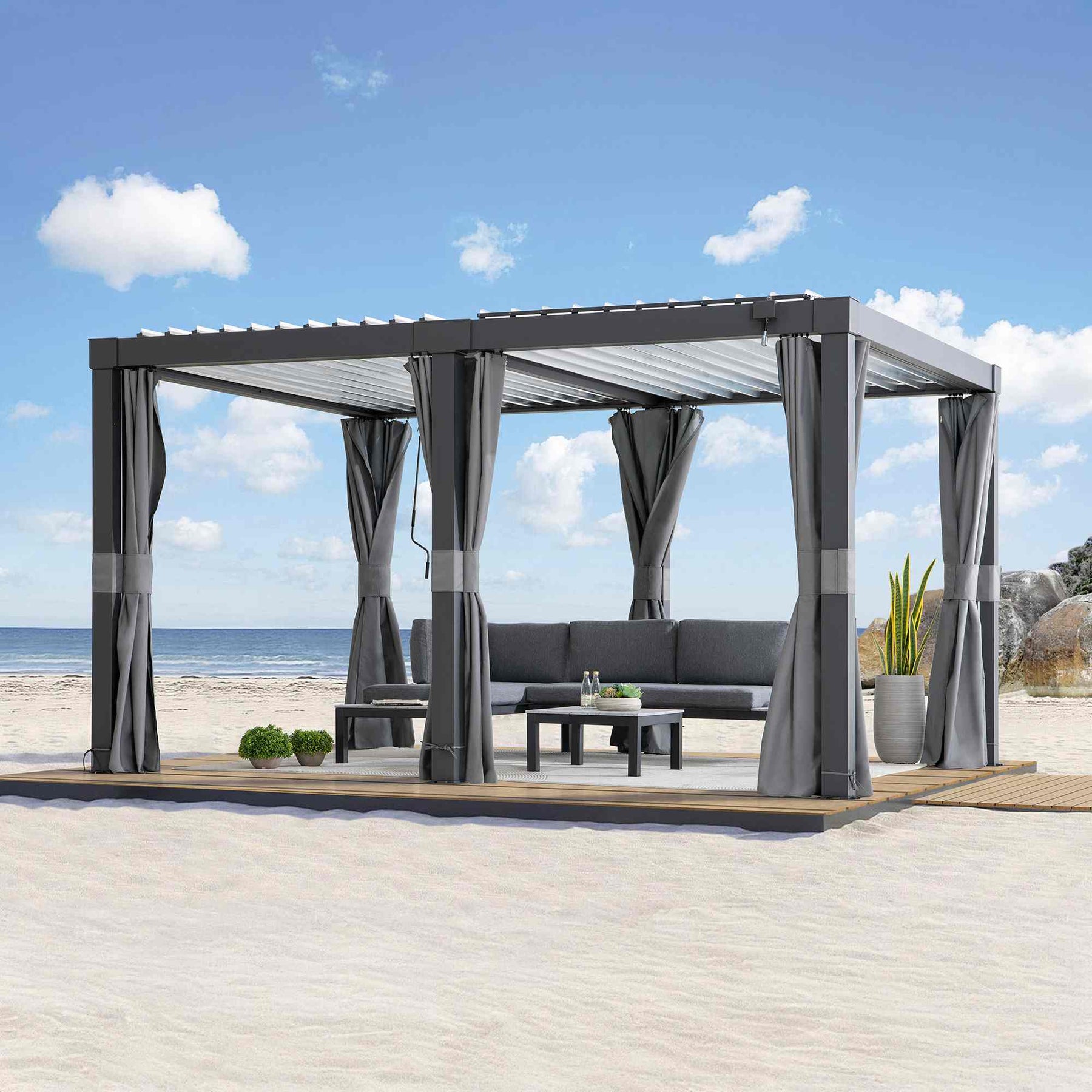 · Modular Multi Louvered Pergola MATTERHORN with LED - Aluminum
Soil/Lawn areas
Use screw foundations/helix anchors with known pull-out force; in weak soil, pour concrete foundations (observe geotechnical specifications/anchor standards).
Wooden deck
Supplement with spacers/support beams under each foot and bolt through steel angles; lag screws into deck boards alone are insufficient.
 · Sunjoy Cedar Gazebo PAPS - 336cm x 336cm
How much weight per support?
Ballast complements mechanical anchoring – it does not replace it. For light folding tents, 10–20 kg per support is common for light breezes; hardtops require significantly more. Suitable options include weighted planters, steel plates, sand/water weights, or concealed ballast boxes. The required amount depends on the spacing of supports, roof shape, and expected gusts; when in doubt, dimension generously – always combine ballast with anchors.
Details for uplift and bracing loads
Where the design allows, cross-brace; keep the roof profile low; avoid large overhangs. In wood, use through bolts and large washers to distribute loads. For aluminum, ensure that base plates are fully seated on flat, load-bearing surfaces. After storms, re-check connections.
 · Sunjoy Cedar Gazebo EGGI - 396cm x 396cm
Action Plan for Storm Season
-
Soft tops: Remove roofs/side panels before strong winds and store dry.
-
Hardtops: Close and lock louvers; secure side screens.
-
Guying: Before anticipated storms, add tensioning straps/guy ropes to permanent anchors.
-
Tidiness: Clear loose material, trim branches, secure furniture.
-
After the storm: Check anchors, base plates, and concrete for loose screws, bending, or cracks.
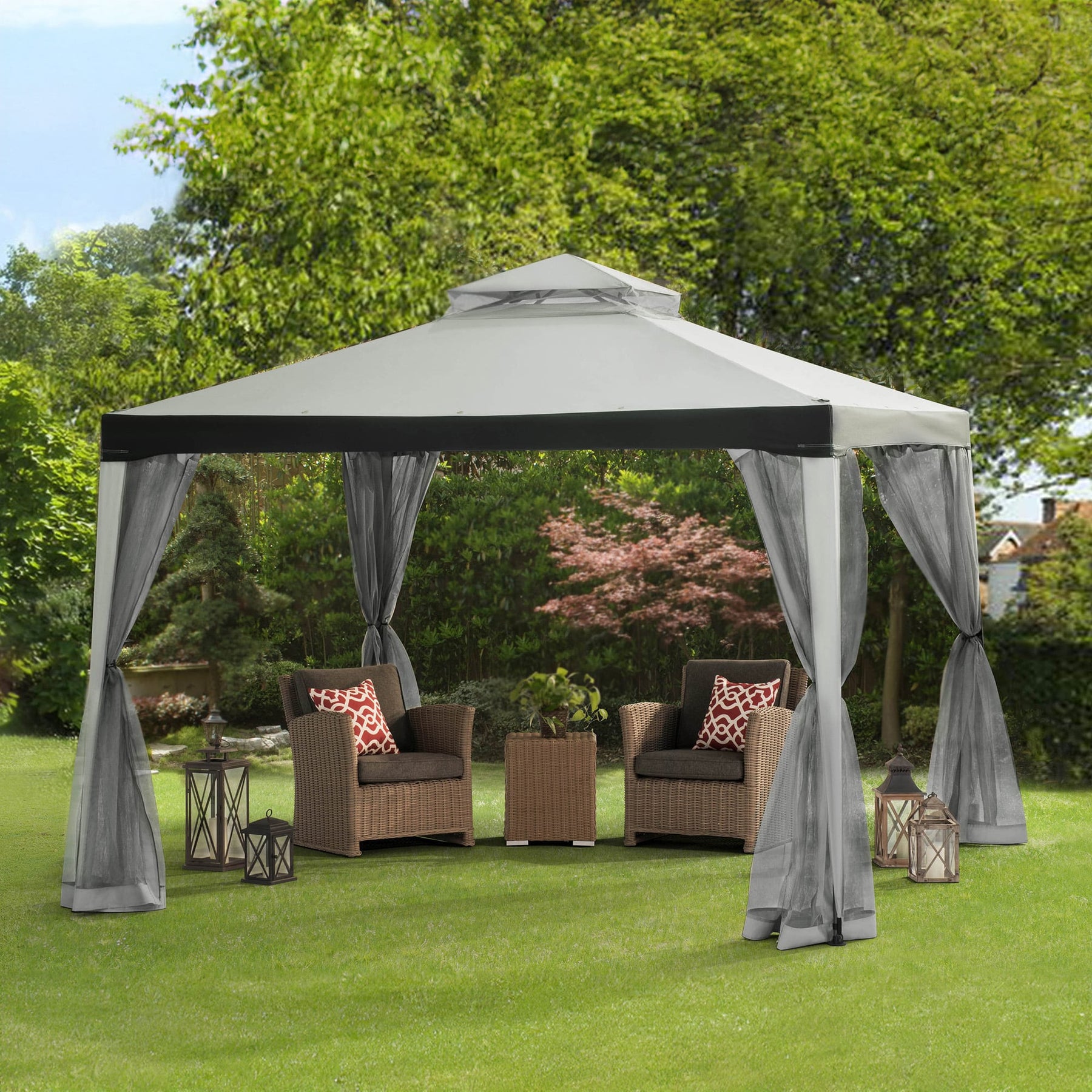 🌿 Sunjoy Fabric Gazebo Roseg - 300cm x 300cm
Safety for people and property
Never rely solely on adhesives. Avoid underground lines. Maintain clearances from neighboring properties/windows – flying parts can cause damage. In publicly accessible areas, obtain expert planning for wind loads and liability.
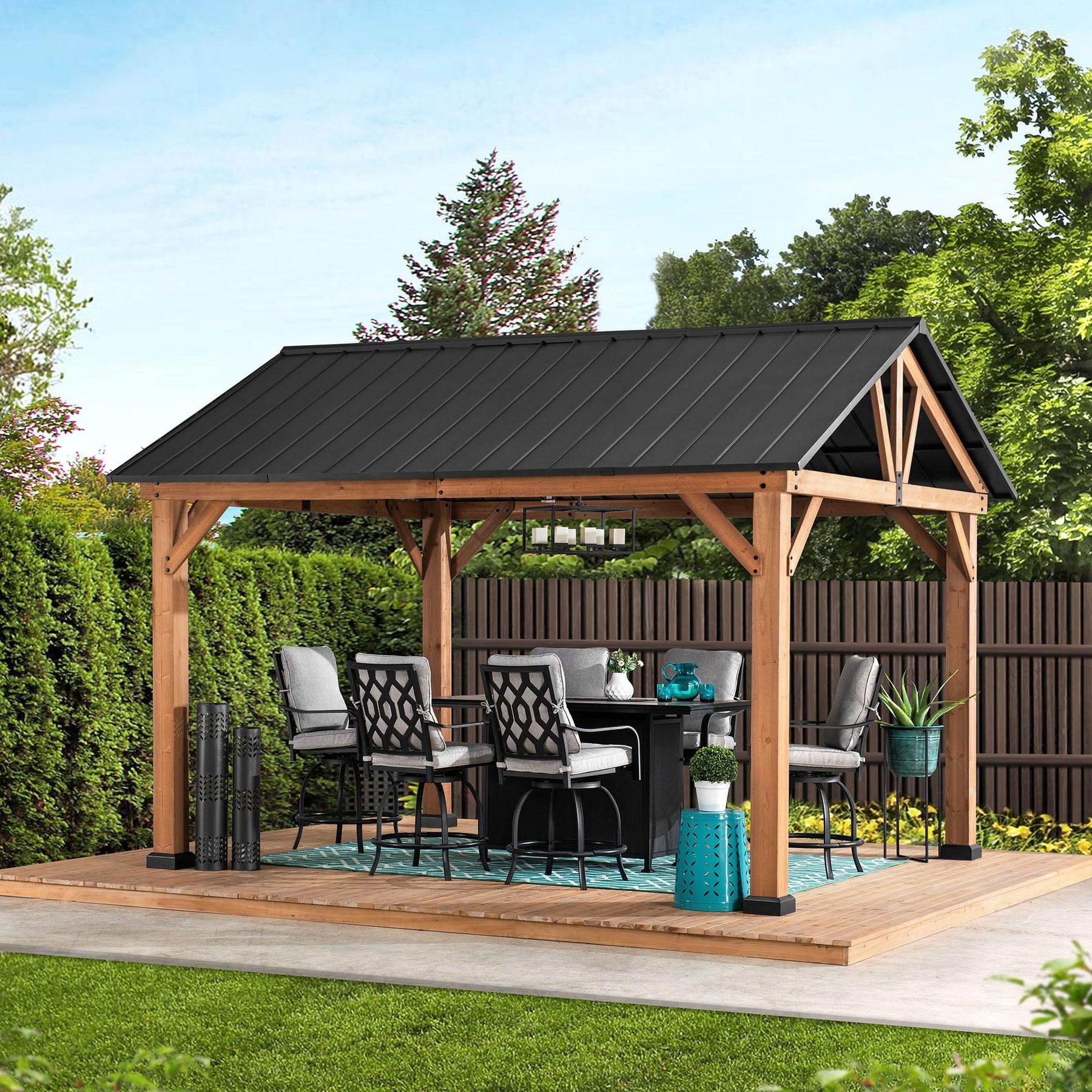 · Sunjoy Cedar Gazebo TÖDI - 336cm x 400cm


